Classical (Raja) Yoga
The Yoga Sutras' eight limbs, from ethics and posture to breath, concentration and meditation: yoga as stilling the mind.
More ↗Tai Chi · Qigong · Yoga · Mandarin · Nature
Peter Davey's practice space: the Yang Tai Chi, Qigong and Yoga he studies, the practice timers he trains with at home, and the Mandarin behind the moves.
Also here: Paths of Practice, a map of the world's contemplative traditions; a personality compass; and a field guide to the NSW coast.
Yang Tai Chi rests on thirteen movements of energy: eight for the hands and five for the steps. Every form, weapon and push hands drill I am learning comes back to them.
The syllabus in teaching order, with our class videos and the lineage masters performing each form. Each section also has space for your own notes.
A short note: I am a student, not a teacher. Everything here is my own practice record of what I am learning at Newcastle Tai Chi under Sifu Damon Bramich, with teachers Sue Seivl and Wei Su. The practice sessions are timers to help me train between classes. If you want to learn these forms, please learn them in person from a qualified teacher; some schools are listed under Schools.
Yang Chengfu's ten points are the standard every posture in the form is measured against. Each one here with what it means, where it turns up in class, the mistake it usually hides behind, and video to watch it in.
How Yang style travelled from teacher to student and city to city. Drag to turn the globe, then choose a name to see where they taught and what their school offers.
A short history of the art as historians record it, from the Chen village to the Yang family, our Fu line and the world today, then the books worth reading. Legends are marked as legends; each step links to its source.
Many schools trace Tai Chi to the Daoist Zhang Sanfeng on Wudang Mountain. It is a cherished story, but there is no historical record linking him to the art. Source ↗
A Ming dynasty officer (1580–1660) in the Chen village, Henan, usually credited with creating the Chen family boxing from which every later style grew. Source ↗
Yang Luchan (1799–1872) studied under Chen Changxing, then taught in Beijing, where the art spread beyond the village and became Yang style. Source ↗
The treatise credited to Wang Zongyue was found in a Beijing salt shop by Wu Chengqing, brother of Wu Yuxiang. With writings by Wu Yuxiang and his nephew Li Yiyu, it became the core theory every style studies. Source ↗
Wu Yuxiang, a student of Yang Luchan, founded Wu (Hao) style; Wu Quanyou and his son Wu Jianquan, from the Yang circle in Beijing, gave rise to Wu style; and Sun Lutang (1860–1933) later created Sun style. Source ↗
Yang Luchan's grandson Yang Chengfu (1883–1936) standardised the large-frame form taught today and taught it widely across China. His student Chen Weiming recorded his Ten Essentials in 1925, and his own books followed in 1931 and 1934. Source ↗
Fu Zhongwen (1903–1994), Yang Chengfu's student and relative by marriage, taught the long form in Shanghai and published his manual of the 85-movement form in 1963. Source ↗
China's sports authorities built a short standard routine from the Yang long form. It is now one of the most widely practised Tai Chi forms. Source ↗
Cheng Man-ch'ing, another of Yang Chengfu's students, began teaching his 37-posture form in New York, one of the main routes by which Tai Chi spread outside Asia. Source ↗
Fu Zhongwen's son Fu Shengyuan (1931–2017) taught in Perth from 1989. Newcastle Tai Chi's line comes through him; see the Lineage page.
Held on the last Saturday of April each year, with events in around eighty countries. Source ↗
Taijiquan was added to UNESCO's Representative List of the Intangible Cultural Heritage of Humanity. Source ↗
Paul Brennan's translations of the original Chinese texts.
Schools and associations with a verifiable teaching line back to the Yang family. Links were checked in September 2026.
| School | Lineage | Based in | Links |
|---|
Schools count generations differently, so they are shown here as a guide only. To suggest a school or a correction, add it to the lineage data file.
Guided stretching sessions of 5, 15 and 30 minutes. Each pose is timed; a voice can name each pose, five beats sound before the next one, and soft music can play throughout. Adjust any pose's time before you start. Below them: guided meditations, the main kinds of yoga, and books to read.
Short seated and lying meditations. A voice guides each step and a soft chime marks the change if five beats are on. Find a quiet spot, sit or lie comfortably, and press start.
Yoga began as a family of spiritual paths in India; the posture practice most people know today grew out of one of them, Hatha Yoga, in the twentieth century. The sessions above are yoga as exercise: stretching drawn from that tradition.
The Yoga Sutras' eight limbs, from ethics and posture to breath, concentration and meditation: yoga as stilling the mind.
More ↗Liberation through insight and self-enquiry; closely tied to Advaita Vedanta.
More ↗Loving devotion to a personal deity, through chanting, prayer and service.
More ↗Doing one's duty without attachment to the results: everyday work as practice.
More ↗Postures, breath control, seals and cleansing practices to prepare body and mind for meditation. The root of modern posture yoga.
More ↗Breath, mantra, posture and meditation aimed at awakening the energy said to lie coiled at the base of the spine.
More ↗Breath, mantra and mudra techniques, brought to the West by Paramahansa Yogananda.
More ↗Precise alignment, poses held longer, and props such as blocks, belts and blankets so every body can find the shape.
More ↗Fixed series of poses linked by flowing movements, each one timed to the breath. Energetic and demanding.
More ↗Flowing sequences that change from class to class, moving with the breath between poses.
More ↗Floor poses held for several minutes, drawing on Taoist ideas and Chinese medicine's meridians: a quiet companion to Tai Chi and Qigong.
More ↗A few fully supported poses held for a long time, to rest the body and calm the nerves.
More ↗A guided relaxation lying down, resting between waking and sleep. The Body Scan above is a simple taste of it.
More ↗Flashcards, quizzes, tones, stroke-order writing and speaking practice for the HSK 1–3 exams, plus the Chinese names of the moves we practise. Progress is saved in this browser.
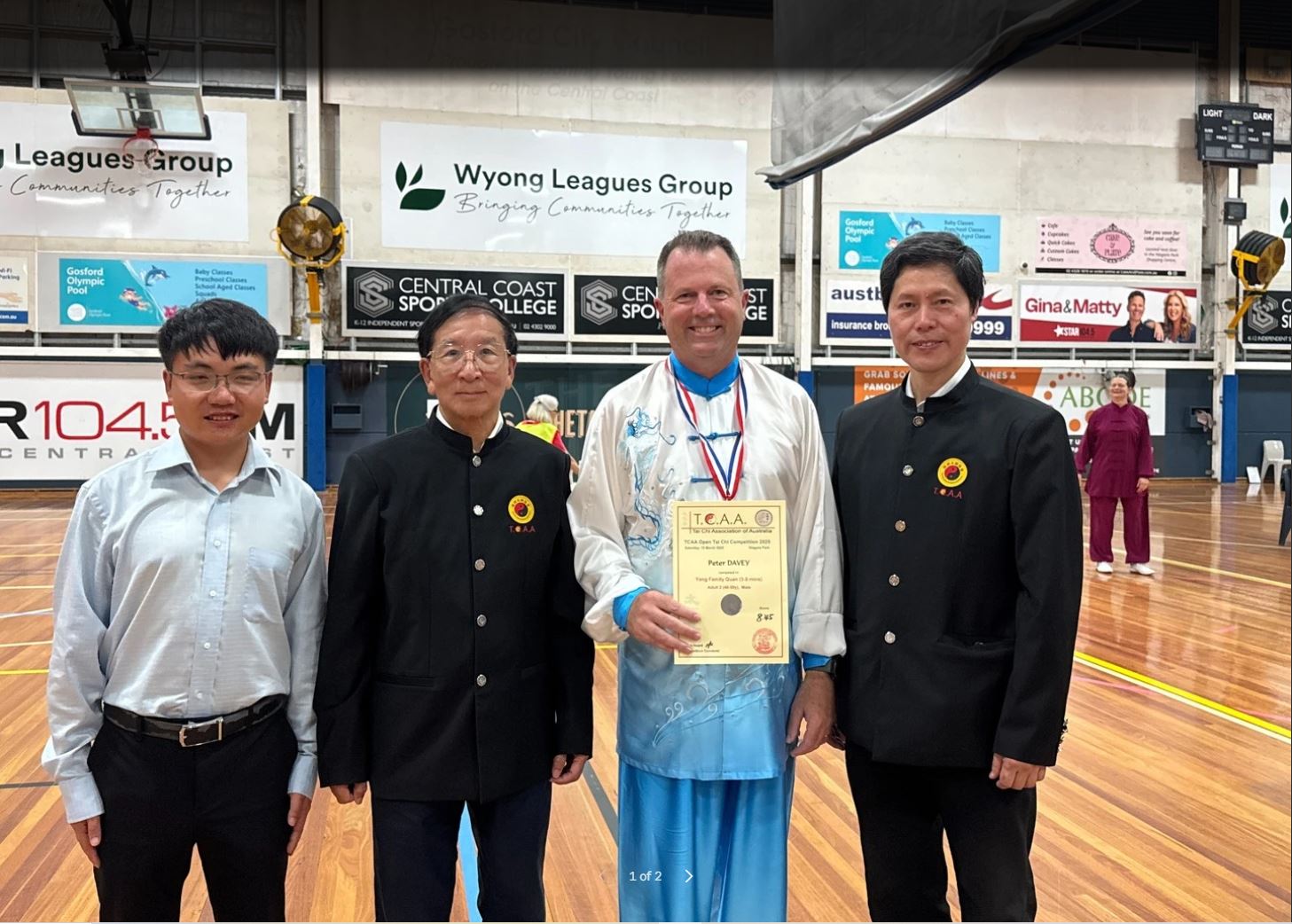
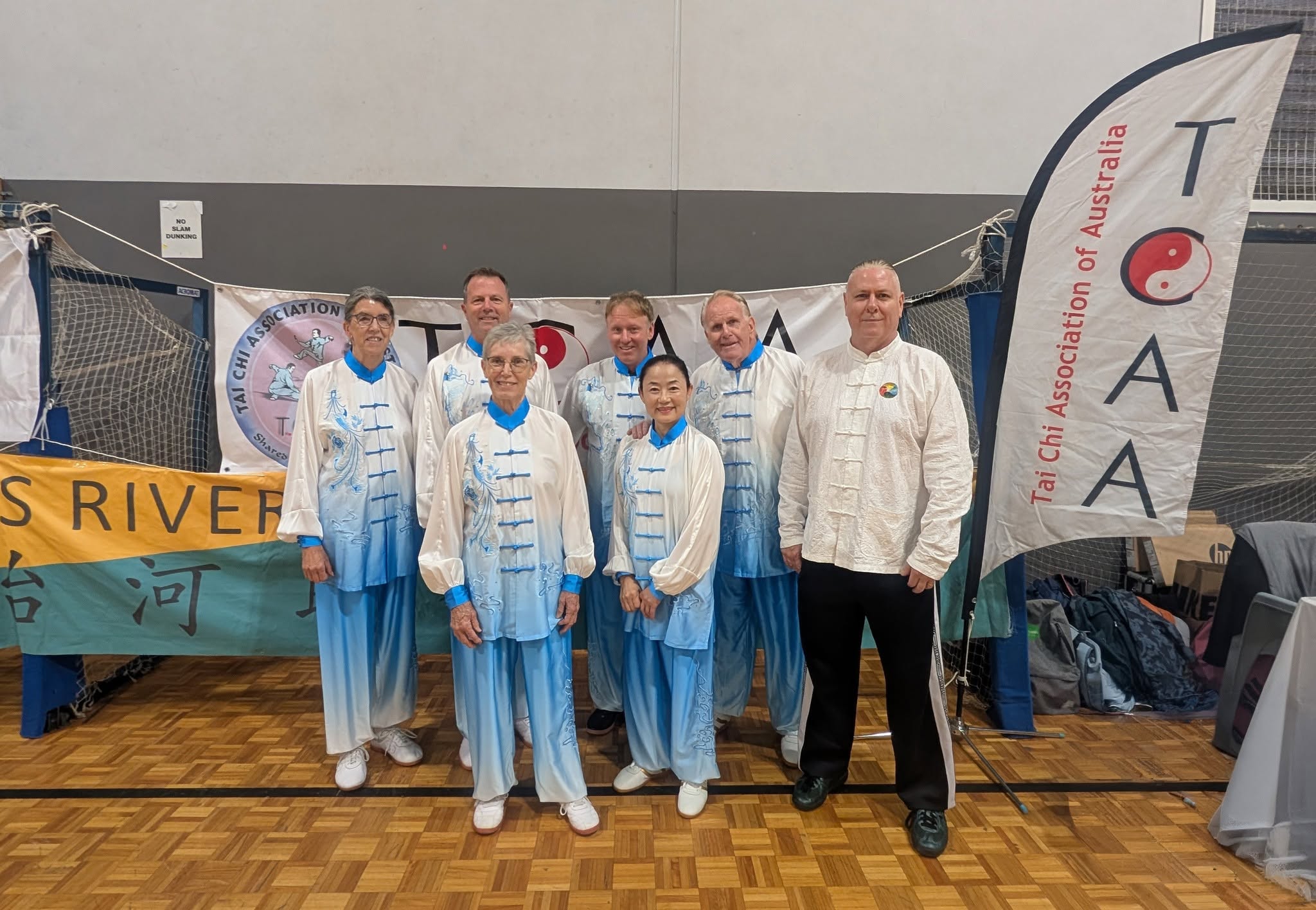
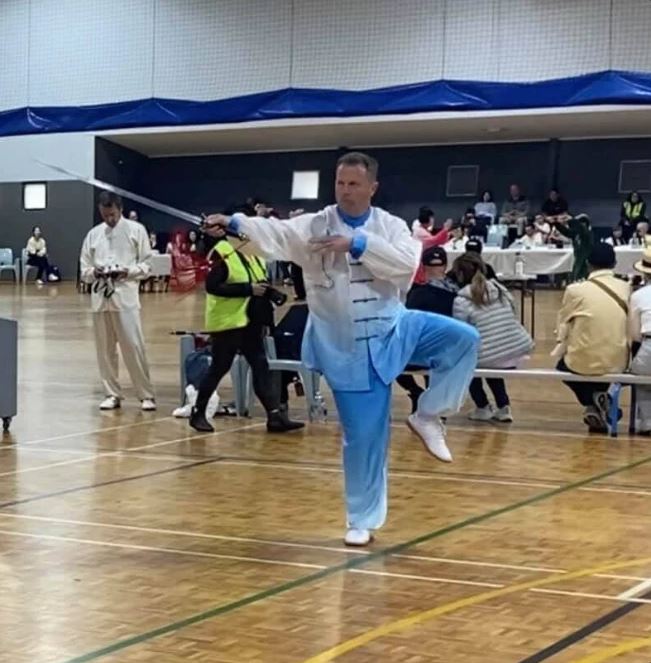
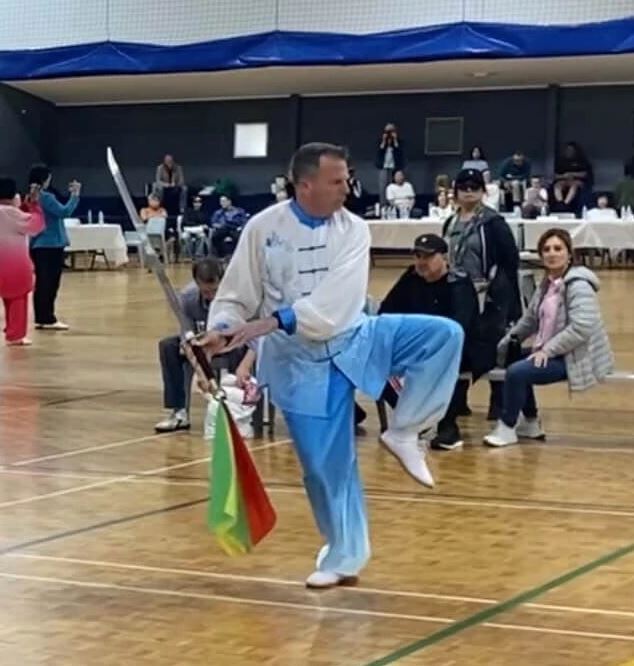
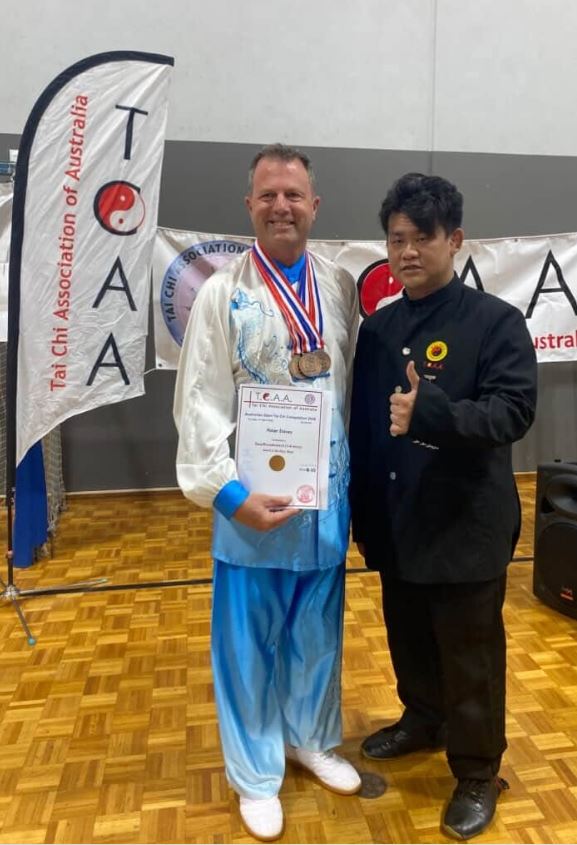
Results and photos from Tai Chi Association of Australia championships.
Hurstville Aquatic and Leisure Centre, Sydney · Sunday 12 April 2026 · 40 competitors and 10 teams
Niagara Park, Central Coast · Saturday 15 March 2025